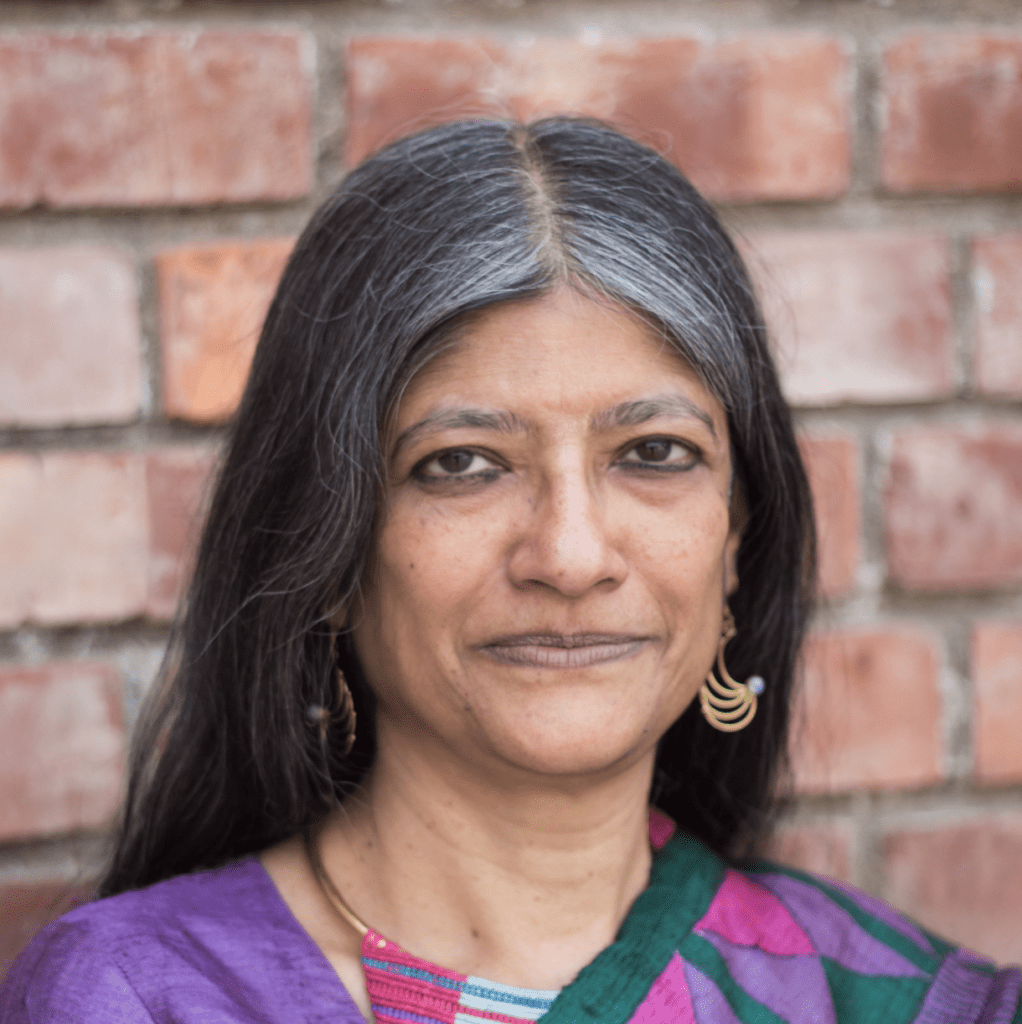
Professor Jayati Ghosh Interviewed by Sakuna M Gamage
Professor Jayati Ghosh is one of the world’s foremost development economists, known for
her incisive critiques of neoliberalism and global financial institutions. Currently a Professor
of Economics at the University of Massachusetts Amherst, she was previously Chairperson
at the Centre for Economic Studies and Planning at Jawaharlal Nehru University, New Delhi.
A leading voice in global policy debates, she has served on the United Nations High Level
Advisory Board on Economic and Social Affairs, and the WHO Council on the Economics of
Health for All as well as She is a co-founder of International Development Economics
Associates (IDEAs). In an exclusive interview during her recent visit to Colombo for (April
2025), Ghosh dismantled the myth of Sri Lanka’s “exceptional” collapse, situating it within a
global pattern of debt traps, gendered austerity, and the failures of neoliberal orthodoxy.
In South Asia, and particularly in Sri Lanka, Prof. Ghosh has long warned of the dangers of
externally imposed economic orthodoxies and the deepening inequality they produce. Her
writings have critiqued austerity, debt conditionalities, and the erosion of public services
under IMF led reforms. With a unique blend of technical insight and deep moral clarity, she
has consistently championed economic strategies grounded in equity, employment, and
sovereignty.
In this wide ranging conversation, Prof. Ghosh evaluates Sri Lanka’s post-crisis path under
the new National People’s Power (NPP) government led by President Anura Kumara
Dissanayake as well as global economic shift with great power politics and it’s imapct.While
she acknowledges a shift in political will, she cautions that the economic vision must now
radically depart from the past. “The time for tweaks is over,” she says. “The world is
changing. Our economics must too.”
Sakuna Gamage (SG): Do you believe the current Sri Lankan government is on the right
track economically, especially under the guidance of the IMF? What indicators or patterns
suggest otherwise?
Jayati Ghosh (JG): No, I don’t think so. In fact, I don’t think any country with an IMF
programme today is on the right track, because the global economy has changed so
significantly.
First of all, if there’s a sudden earthquake, a tsunami, or a massive external shock like the
pandemic or global recession, you have to adjust. You can’t pretend conditions are the same
as before. Yet, the IMF agreements tend to lock countries into rigid parameters and that’s
the first issue. Because of the massive uncertainties unleashed by US President Trump’s
trade policies, Sri Lanka will likely face massive trade disruptions and falling foreign
exchange earnings. That should, in itself, warrant a shift in approach.
But beyond that, this IMF programme was flawed from the beginning. It was based on
incorrect and overly optimistic assumptions about economic growth. Worse, it placed the
burden of adjustment primarily on working people and retirees. This should have been
renegotiated from the start, and certainly must be now. Even if it’s not formally
renegotiated, the government should not feel bound to follow those parameters. They
should be spending differently, raising revenue differently, and planning differently;
essentially, doing everything differently.
SG: What are the structural risks in Sri Lanka’s current economic trajectory under IMF-led
reforms, particularly regarding public services, debt sustainability, and inequality? What
alternatives do you see to this austerity driven model?
JG: Sri Lanka faces multiple intersecting problems. There's the debt crisis and foreign
exchange shortage, but also mass unemployment, and declining viability across agriculture,
services, and manufacturing.
The current trajectory under IMF pressure simply does not address these systemic issues. So
if the government truly wants to honour its electoral mandate, which was a demand for
change. it must act boldly. That means focusing on reviving key sectors, especially small-
scale agriculture. This requires investments in cooperatives, better access to inputs and
credit, and marketing support.
The same goes for small enterprises and employment. Public spending must increase
particularly in health, education, and social protection, which is not only essential for
people’s well-being but also a significant generator of employment. For example, hiring
more nurses, teachers, administrators, that’s employment creation and also adds to
secondary employment generation through multiplier effects. The obvious question then is:
how can the government afford this? The answer lies in progressive taxation. Move away
from VAT and user fees, which hurt the poor, and instead tax the ultra-rich. The top 0.01%
who have escaped the brunt of the crisis. A modest 2% annual wealth tax on individuals
with financial assets over $10 million would be barely noticeable to them, but could raise
significant revenue. Additionally, plug the loopholes in the tax system. Studies have shown
how corporations avoid taxes through illicit financial flows. Countries like Ecuador doubled
their tax revenues simply by plugging these holes, without raising tax rates.
So yes, Sri Lanka needs a sovereign, pro people economic strategy, one that ensures the rich
pay their fair share, and public investment supports long term resilience.
SG: The new government’s first budget has introduced some changes in tax policy, moving
away slightly from Former Interim Pres. Ranil Wickremesinghe’s regressive model. Do you
see this as a step in the right direction?
JG: Maybe, but I would argue that the time for small changes is over. The world is
undergoing massive transformations. economic, geopolitical, and ecological. You can’t
respond with 1% tweaks here and there. The government has to be bold. Cautious and
tentative policymaking simply won’t cut it anymore.
SG: How do you assess Sri Lanka’s Domestic Debt Restructuring (DDR) and its broader
socio-economic implications? Who gains and who loses?
JG: DDR tends to disproportionately impact ordinary citizens, through their pension funds,
banking sector exposure, and rising inflation. In contrast, many financial elites and external
bondholders often escape relatively unscathed.
If debt restructuring is designed in a way that prioritises financial market “stability” over
people’s economic survival, it will exacerbate inequality and reduce trust in government. A
just DDR must protect vulnerable savers and retirees, while ensuring that the burden is
shared equitably, especially by those who profited during the boom years.
SG: With the US–China tariff war and the return of protectionism, are we witnessing the
end of the neoliberal free trade era? How should countries like Sri Lanka, deeply
embedded in global supply chains, respond to these changes?
JG: It’s definitely bad news for developing countries, including Sri Lanka. The tariff war and
global uncertainty reduce trade, shrink export markets, and deter investment. This impacts
everything from tourism to remittances. But the bigger issue is that the neoliberal global
order, premised on unregulated free trade, deregulation, and capital mobility has already
been crumbling. We need to stop seeing this as merely a setback and start preparing
alternative strategies.
Don’t go begging to powerful countries for tariff relief. Instead, think about crisis response
in a way that is pro-people, pro-worker, and gender-sensitive. The government’s mandate
came from the people, not from corporate or financial interests. If the state forgets this,
people must remember it.
SG: As you mentioned, workers, especially women in Free Trade Zones, are extremely
vulnerable. With potential export losses to the US, and proposed changes to labour laws,
how do you see the situation unfolding?
JG: It’s a dangerous myth that weakening labour laws makes a country more competitive.
The evidence simply doesn’t support that. Countries like Thailand have done well without
undermining labour rights.
In fact, strengthening labour protections and improving wages is essential, not only for
justice but for economic resilience. If exports fall, you need to boost domestic demand. That
means improving worker incomes in plantations, garment factories, and rural economies.
Reviving smallholder agriculture and ensuring decent rural livelihoods are key to stabilising
the domestic economy.
SG: Do you think we are at the end of the neoliberal era globally?
JG: The neoliberal order had already been significantly weakened, even before COVID. The
pandemic, the Ukraine war, US–China tensions, and climate shocks have exposed its failings.
Western-led sanctions and economic warfare strategies, aimed at crippling Russia or
containing China, haven’t worked as intended. Instead, they’ve revealed the limits of
Western economic power. Meanwhile, the battle over green energy, whether it’s lithium,
solar panels, or rare earths, has become the new front in global capitalist competition. But
this could also be a chance for the Global South to reshape its role in the world economy, if
we act wisely.
SG: What about the IMF and World Bank? Has anything changed post-COVID, or is it still
austerity as usual?
JG: Unfortunately, despite all the rhetoric of “building back better” or “inclusive recovery,”
it’s largely still austerity-as-usual. The fundamental approach hasn’t changed. The IMF
continues to prioritise debt servicing, fiscal consolidation, and price stability over people’s
livelihoods and structural transformation. The only real change will come when countries
push back, collectively and creatively, to demand an alternative international financial
architecture. One that serves development, equity, and environmental justice.
SG: Given the ongoing trade and tariff conflicts, particularly between the U.S. and China,
do you think we are witnessing the end of the neoliberal trade era? Or will global
capitalism simply adapt and continue in a different form?
JG: That’s an important question. In many ways, the neoliberal order has already been
deeply shaken. Trump certainly rattled it, but Biden (contrary to popular belief)
consolidated some of its unravelling, especially in global trade norms. However, it depends
on how we define neoliberalism.
In the Global South, we were always told it meant free markets, deregulation, and minimal
government intervention. But in fact, it was always about protecting big capital, entrenching
corporate interests and changing regulations to favour those interests over those of working
people. Sadly, this contradiction continues.
The real tragedy is that policymakers in our countries still cling to this outdated model,
thinking they must protect big business or risk collapse. That’s the mistake. What we need is
deeper regulation, not deregulation, of markets, if we’re serious about people and planet
centred development. Unrestrained capital doesn’t just erode livelihoods; it ravages the
environment and deepens inequality. The neoliberal mindset still dominates, and
dismantling it is crucial.
This is especially important given that the “90-day pause” by Trump on the outrageous
tariffs imposed by the US is being seen by too many countries as a chance to reduce the
tariffs by making often extreme and undesirable concessions to serve the interests of US
capital and thereby placate the US government. What is clear now from the behaviour of
Trump since then is that such measures will not really help; rather, they will show weakness
and thereby incite even greater abuse of power. At this point, any government negotiating
with the Trump administration must place the interests of its own people and development
strategy at the centre, and not make any concessions that would undermine those. This
necessarily means a different economic strategy for the future, one that is not so heavily
reliant on exports and foreign receipts, but seeks to increase the domestic market by
improving the living conditions of ordinary people.
SG: Why have economic sanctions and “economic warfare” strategies failed to seriously
weaken powers like Russia and China? What does that tell us about the limits of Western
dominance?
JG: It tells us a great deal. These strategies failed because global economic power is far more
distributed than it once was. Russia and China, for all their challenges, have built alternative
economic infrastructures and diversified alliances. They aren’t easily isolated anymore.
This signals the declining hegemony of the West. Western powers, especially the U.S., are
realizing that economic coercion no longer yields predictable geopolitical outcomes. The
multipolar world is real, and that’s precisely why we're seeing this geopolitical flux.
SG: Do you see the race for control over the green energy transition as yet another front
in global capitalist competition or can it be a moment for the Global South to reshape its
economic future?
JG: The energy transition is inevitable but how it’s done matters immensely. Unfortunately,
right now, it’s unfolding like every other capitalist competition. Wealthy nations and
corporations are racing to dominate the critical minerals supply chains, large scale solar and
wind projects, and green hydrogen.
But the Global South doesn’t have to follow that script. We can and should pursue a more
decentralized, people-focused energy transition: community led, small-scale, equitable. We
shouldn’t allow a green future to replicate the extractives of the past. This is a chance to
reimagine development and break from the high-carbon, high-inequality model.
SG: What about the IMF and World Bank? Do you see any shift in their approach post-
COVID or is it still “austerity as usual”?
JG: There’s been a lot of rhetoric about reform, especially after COVID. But on the ground,
It’s largely austerity-as-usual. Conditionalities are still harsh. Social spending gets squeezed.
Debt sustainability is still prioritized over human sustainability.
If anything, the pandemic and the war in Ukraine have only deepened dependency,
particularly for lower-middle-income countries. The institutions have tinkered around the
edges, with some debt pauses, a few minor climate financing packages, but the structural
paradigm remains the same: stabilize economies for creditors, not people.
SG: Given the ongoing trade and tariff conflicts, particularly between the U.S. and China.
Do you think we are witnessing the end of the neoliberal trade era? Or will global
capitalism simply adapt and continue in a different form?
JG: That’s an important question. In many ways, the neoliberal order has already been
deeply shaken. Trump certainly rattled it, but Biden contrary to popular belief consolidated
some of its unravelling, especially in global trade norms. However, it depends on how we
define neoliberalism.
In the Global South, we were always told it meant free markets, deregulation, and minimal
government intervention. But in the richer countries, it was always about protecting big
capital, entrenching corporate interests. Sadly, this contradiction continues.
The real tragedy is that policymakers in our countries still cling to this outdated model,
thinking they must protect big business or risk collapse. That’s the mistake. What we need is
deeper regulation, not deregulation of markets, if we’re serious about people and planet-
cantered development. Unrestrained capital doesn’t just erode livelihoods; it ravages the
environment and deepens inequality. The neoliberal mindset still dominates, and
dismantling it is crucial.
SG: Then why have economic sanctions and “economic warfare” strategies failed to
seriously weaken powers like Russia and China? What does that tell us about the limits of
Western dominance?
JG: It tells us a great deal. These strategies failed because global economic power is far more
distributed than it once was. Russia and China, for all their challenges, have built alternative
economic infrastructures and diversified alliances. They aren't easily isolated anymore.
This signals the declining hegemony of the West. Western powers, especially the U.S., are
realizing that economic coercion no longer yields predictable geopolitical outcomes. The
multipolar world is real, and that’s precisely why we're seeing this geopolitical flux.
SG: Do you see the race for control over the green energy transition as yet another front
in global capitalist competition or can it be a moment for the Global South to reshape its
economic future?
JG: The energy transition is inevitable, but how it’s done matters immensely. Unfortunately,
right now, it’s unfolding like every other capitalist competition. Wealthy nations and
corporations are racing to dominate the critical minerals supply chains, large-scale solar and
wind projects, and green hydrogen.
But the Global South doesn’t have to follow that script. We can and should pursue a more
decentralized, people-focused energy transition, community-led, small-scale, equitable. We
shouldn’t allow a green future to replicate the extractives of the past. This is a chance to
reimagine development and break from the high-carbon, high-inequality model.
SG: What about the IMF and World Bank? Do you see any shift in their approach post-
COVID or is it still “austerity as usual”?
JG: There’s been a lot of rhetoric about reform, especially after COVID. But on the ground?
It’s largely austerity as usual. Conditionalities are still harsh. Social spending gets squeezed.
Debt sustainability is still prioritized over human sustainability.
If anything, the pandemic and the war in Ukraine have only deepened dependency,
particularly for lower-middle-income countries. The institutions have tinkered around the
edges, debt pauses, climate financing packages but the structural paradigm remains the
same: stabilize economies for creditors, not people.
SG: In South Asia, countries like Pakistan, Nepal, Bangladesh, even the Maldives, are
politically and economically fragile right now. How should they navigate this new global
phase of trade wars and economic turbulence? And what about Sri Lanka, deeply
embedded in global supply chains but with limited leverage?
JG: I want to challenge this narrative of weakness. We often hear leaders and intellectuals
from our countries say, “We’re weak.” That’s not true. Every country today is in political
flux, look at the U.S., look at Europe. Sri Lanka just had a powerful democratic moment. You
elected a new president and a new government with a decisive mandate. That’s not
weakness; that’s a sign of potential.
But we must stop acting desperate. Desperation weakens bargaining power. We must shed
this inferiority complex and start engaging smartly with the world, and also with each other.
South Asian countries should be building regional coalitions, talking to Southeast Asia, to
Latin America, countries with shared concerns and struggles.
Whether it’s trade shocks, debt renegotiations, or climate transitions, collective action is our
strength. We need more regional solidarity, not isolation or subordination to global capital.
SG: With shifting global dynamics, especially around rare earth minerals and strategic
industries, do you think we’re entering a new world order? Or is this just prolonged
disorder?
JG: We’re in a transitional period, a deep and messy flux. And I believe this flux will continue
for another five to ten years. It may eventually settle into a new world order or we may
remain in this disorder for a while.
But here’s the thing: for countries like Sri Lanka, being between competing global powers
isn’t necessarily a bad thing. Smart governments leverage multipolarity. When powers
compete, there’s room to negotiate better terms. The unipolar world of U.S. supremacy
offered fewer choices. Now, with China, Russia, India, Brazil, South Africa all asserting
themselves, there’s more room to maneuverer if you do it wisely.
SG: Let’s return to South Asia. Do you believe in the potential of South Asian cooperation,
especially on trade, education, and culture or is that a lost cause given India-Pakistan
tensions and other geopolitics?
JG: I’ve always believed South Asia holds incredible potential for cooperation. Look at
ASEAN, how collaboration has strengthened that region economically and geopolitically. It’s
tragic that we haven’t achieved that here.
Yes, India-Pakistan tensions are a block. But beyond that, India’s approach to its neighbors
has often been overbearing. Instead of fostering trust, it has alienated others. That needs to
change. We need genuine multilateralism, not regional hegemony. The economic potential
is vast, in all sorts of ways: shared energy grids, regional food systems, student and worker
mobility, collaborative disaster management. We’re missing out on a lot of potential gains.
SG: You’ve spoken before about the need for debt justice. Many countries in the Global
South Sri Lanka, Pakistan, Zambia, Paraguay are all trapped in this cycle. What should
governments prioritize at local, regional, and global levels?
JG: First, debt restructuring is essential and non-negotiable. But no country can do it alone.
Collective action is essential. Just as creditors coordinate strategies, debtors must do the
same. Governments should be talking to each other, comparing notes on IMF negotiations,
strategies with bondholders, legal defences. This is especially vital for lower-middle-income
countries with intersecting debt and climate crises. Sri Lanka, for example, should be
coordinating with Bangladesh, Pakistan, even Latin American nations. We must build
debtor’s coalitions. This is the only way to shift the power imbalance.
SG: Finally, on Indian PM Narendra Modi’s recent visit to Sri Lanka: new strategic and
economic agreements were signed. Some see deeper integration; others fear dependency.
How do you read this evolving relationship?
JG: As always, the devil is in the details. Without knowing the full terms, the small print, we
can’t assess the true impact. What’s critical is that any agreement must benefit the people
of Sri Lanka, not just a handful of favoured capitalists.
In many countries Modi visits, deals are structured to benefit particular business elites.
That’s the model. If Sri Lanka blindly accepts such deals, it risks deepening inequality and
dependency. But if the government negotiates wisely, stays calm and not desperate, it can
extract real benefits. Desperation erodes leverage. Confidence and clarity can protect
national interests.