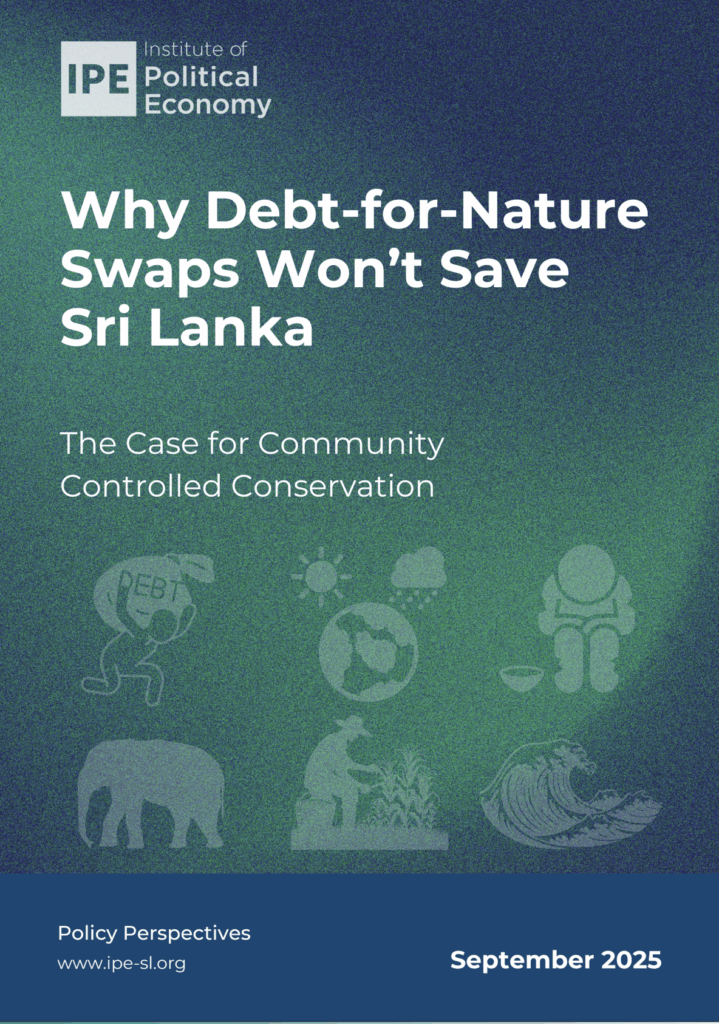
Sri Lanka’s approach to conservation finance will reverberate globally, offering either a template for community-centred environmental solutions or legitimising mechanisms that prioritise financial engineering over ecological justice. The evidence presented reveals why DFNS, despite institutional support for reform, cannot address their fundamental contradictions of commodifying nature while perpetuating power imbalances and delivering minimal debt relief.
Success requires rejecting the false choice between inadequate DFNS and no environmental action. Sri Lanka should instead pursue comprehensive debt restructuring alongside targeted conservation investments – construction sector decarbonisation, upper-watershed restoration, and urban wetland protection – that deliver tangible environmental benefits without abstract ecosystem commodification. These approaches can strengthen community-ecosystem relationships, support rather than undermine sovereignty, and prioritise justice alongside environmental effectiveness.
The opportunity exists to demonstrate that meaningful conservation finance need not depend on nature commodification or external control. Whether Sri Lanka seizes this opportunity to pioneer community-controlled environmental solutions will determine both its trajectory and offer crucial lessons for global conservation finance beyond the DFNS paradigm.
Authors:
Dr Thiruni Kelegama
Melani Gunathilaka